the greatest vintage apple-collection
since 2004 latest update 06012026

since 2004 latest update 06012026
The beginning
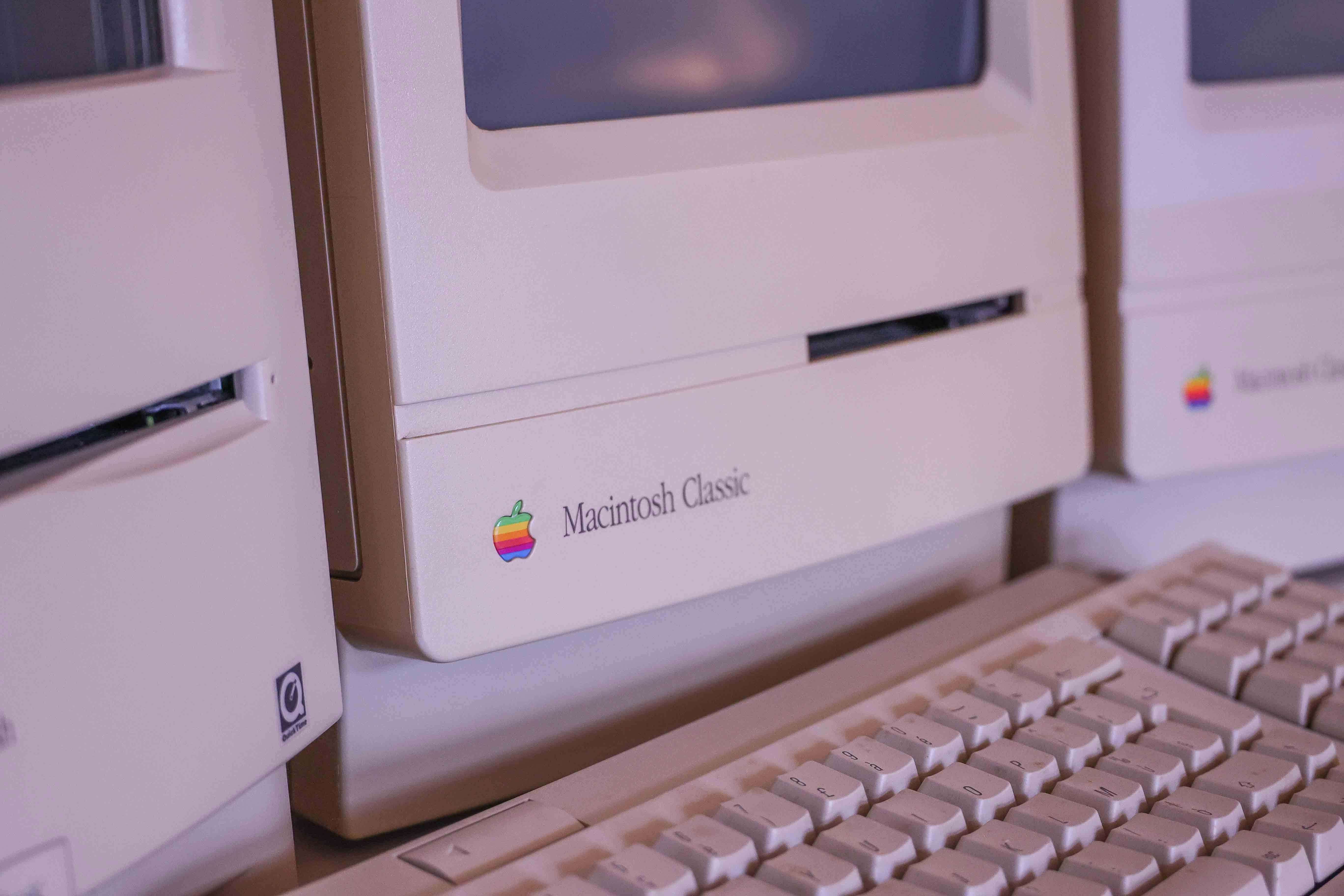
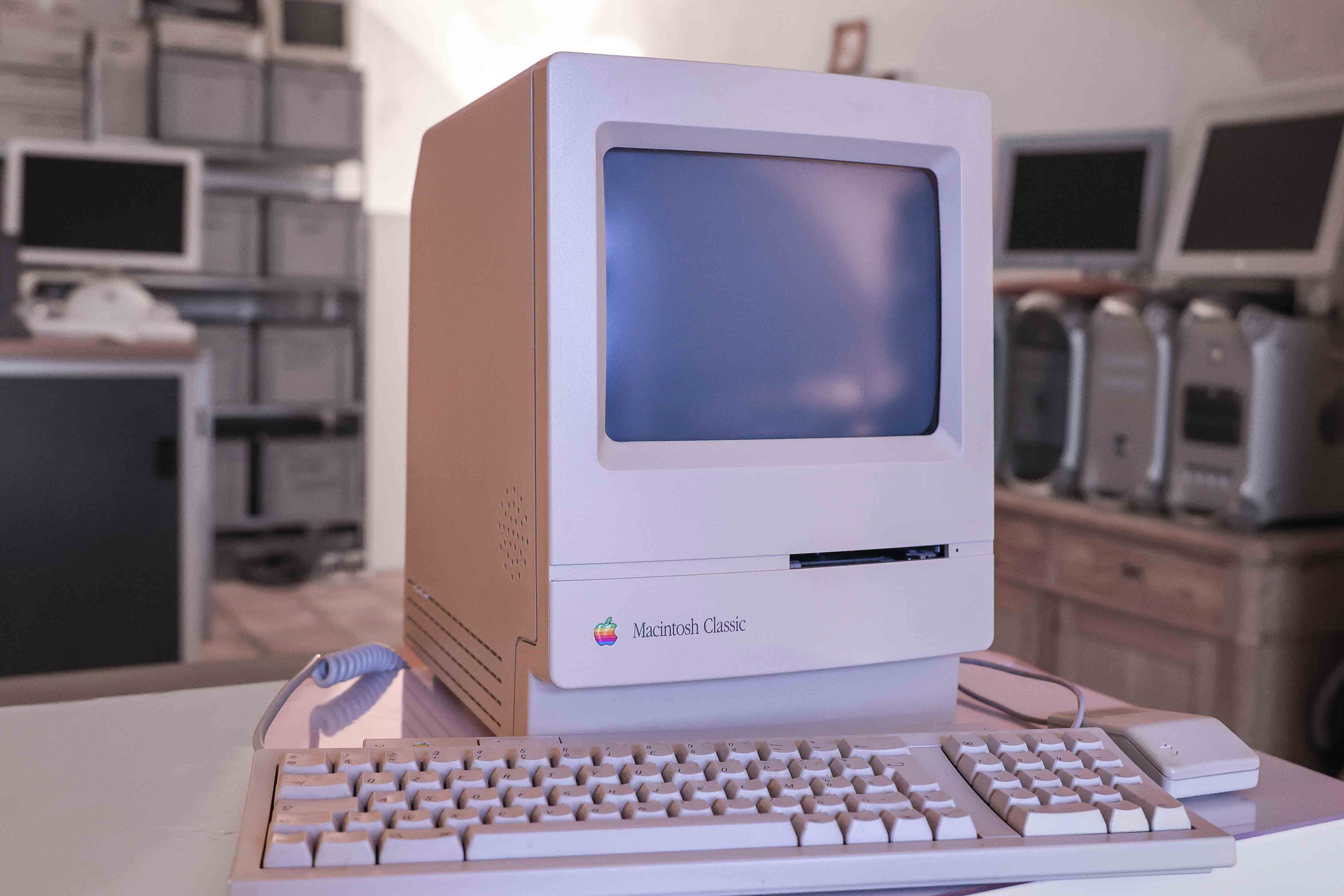
My first Macintosh was the Macintosh Classic. Initially, my relationship with Macs was anything but positive. During my studies, I had already worked with the Macintosh Plus – and, to be honest, I hated it. Constantly swapping floppy disks was inconvenient, slow, and disrupted my workflow enormously.
The Macintosh Classic changed all that in an instant. It had a 40 MB hard drive – suddenly everything was in one place: programs, documents, data. No more disk swapping, no more interruptions to my work. Add to that its compact all-in-one design, which made it significantly more practical for everyday use than the machines I had known before. I can still smell the Classic.
In direct comparison to my Amiga 500, one thing in particular impressed me: the display. The Macintosh Classic had a clear, razor-sharp screen. The 9-inch CRT is still surprisingly good even today – quiet, high-contrast, and very comfortable for working with text. Exactly what you need during your studies.
The Classic was also more portable than you'd expect. I actually took it with me to the sofa – and occasionally even to bed. Together with an HP DeskJet 500, my workspace was complete. Writing texts, printing, continuing to work – my studies were literally saved.
However, over 30 years later, a harsh reality has emerged:
Almost all Macintosh Classics die if the backup battery isn't removed in time. Leaking batteries destroy circuit traces and components – often irreparably. If the device was protected in time, however, the effort required to revive it is surprisingly manageable.
Usually, only the few electrolytic capacitors need to be replaced, along with the infamous RIFA interference suppression capacitors on the analog board. After that, a Macintosh Classic often runs as reliably as before – and immediately evokes that very special feeling of the early days, when computers were still manageable, direct, and tangible.
For me, the Macintosh Classic was the moment when the Macintosh transformed from a student annoyance into a tool – and ultimately into the beginning of a long-lasting fascination.